
Patient Overview
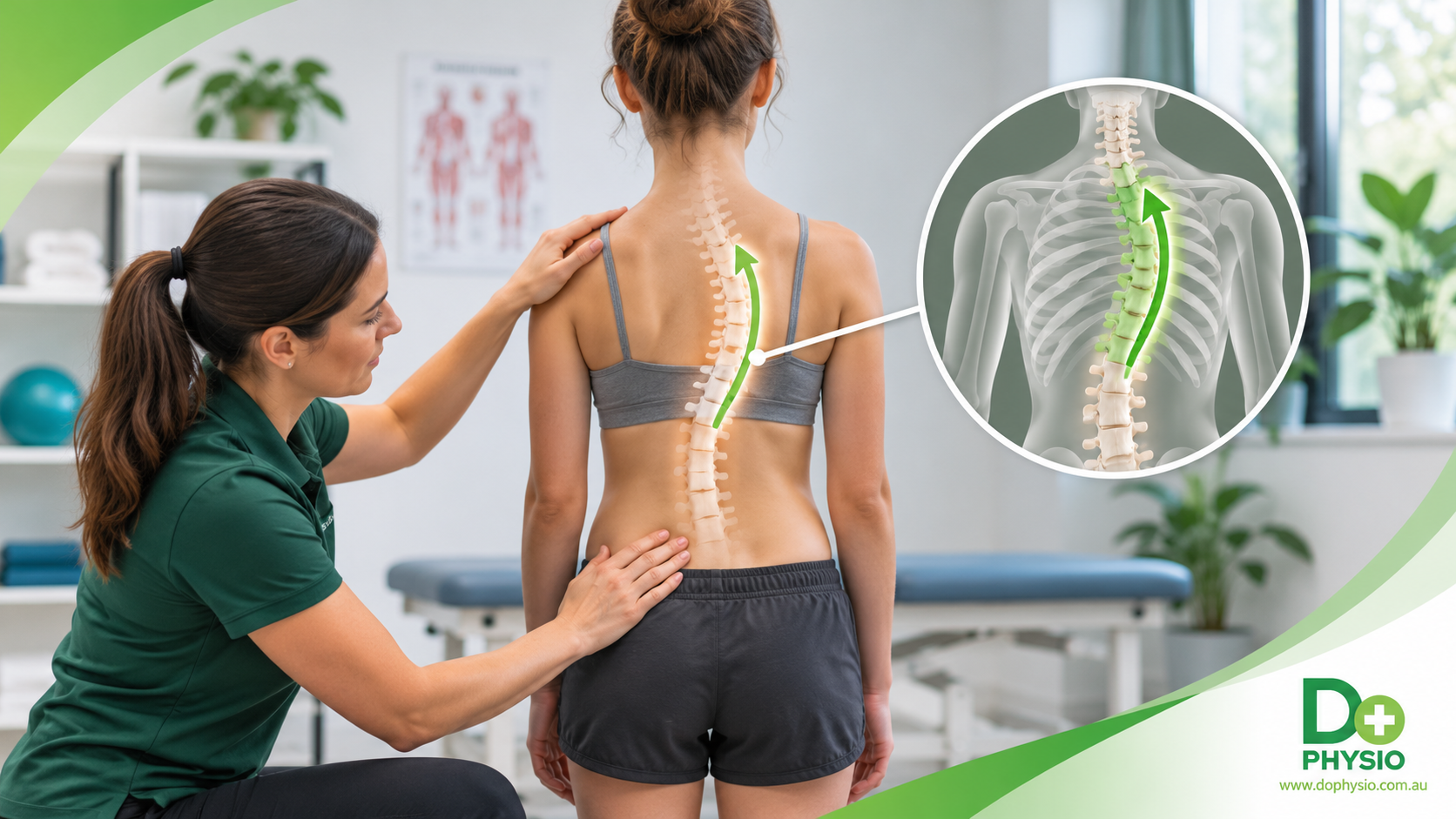
Scoliosis is a three-dimensional spinal deformity involving a sideways curve and rotation. A curve towards the left in the thoracic spine is less typical in adolescent idiopathic scoliosis and deserves careful assessment. It does not automatically mean a spinal cord disorder is present.
Clinical and Academic Discussion
Curve direction and assessment
The direction, location and magnitude of the curve are assessed together with skeletal maturity, progression, symptoms and neurological findings. A right thoracic curve is a common pattern in adolescent idiopathic scoliosis (AIS). A left thoracic curve is an atypical feature that may increase suspicion of an underlying neural axis abnormality, but is not diagnostic.
What does the evidence show?
Wu et al. (2010) identified neural axis abnormalities in 37 of 68 selected patients with a left thoracic curve (54%). This finding supports considering MRI in this presentation, particularly when other concerning features coexist. It should not be interpreted as the probability for every child presenting in primary care.
Faloon et al. (2018) estimated a pooled prevalence of approximately 8% in AIS surgical populations. The review did not establish a clear difference between left and right thoracic curve subgroups. These findings support careful screening rather than a diagnosis based on curve direction alone.
When is MRI appropriate?
The American College of Radiology recommends selective MRI in adolescent idiopathic scoliosis with risk factors. MRI is not routinely indicated for typical AIS without risk factors. An atypical curve, abnormal neurological examination, significant pain or rapid progression may justify medical or spinal specialist assessment to determine whether MRI is needed. Neural axis abnormalities include Chiari I malformation, syringomyelia and tethered cord. New or progressive neurological symptoms require prompt medical assessment.
Rehabilitation and multidisciplinary care
Management depends on curve magnitude, skeletal maturity and risk of progression. The SOSORT guidelines support individualised physiotherapeutic scoliosis-specific exercises (PSSE), delivered by clinicians trained in the chosen approach, and bracing where indicated. Observation, exercise, bracing and surgical consultation have different roles. Atypical findings should be medically evaluated before deciding on a condition-specific rehabilitation plan.
A left-sided thoracic curve is a reason for careful clinical assessment, not a prediction of poor prognosis.
Written by Mr Do Hyun Lee
- Physiotherapist
- Specialising in spinal conditions, neck, and lower back pain
- Member of Australian Physiotherapy Association
References
Wu et al. (2010). The left thoracic curve pattern: a strong predictor for neural axis abnormalities in patients with idiopathic scoliosis. Spine. PubMed; DOI.
Faloon et al. (2018). Incidence of Neuraxial Abnormalities Is Approximately 8% Among Patients With Adolescent Idiopathic Scoliosis: A Meta-analysis. Clinical Orthopaedics and Related Research. PubMed.
American College of Radiology. ACR Appropriateness Criteria: Scoliosis-Child.
Negrini et al. (2018). 2016 SOSORT guidelines: orthopaedic and rehabilitation treatment of idiopathic scoliosis during growth. PubMed; DOI.
Educational information only; individual assessment is recommended.
Literature and clinical content updated 25 November 2026. This is an educational resource, not a substitute for individual clinical assessment.