
Patient Overview
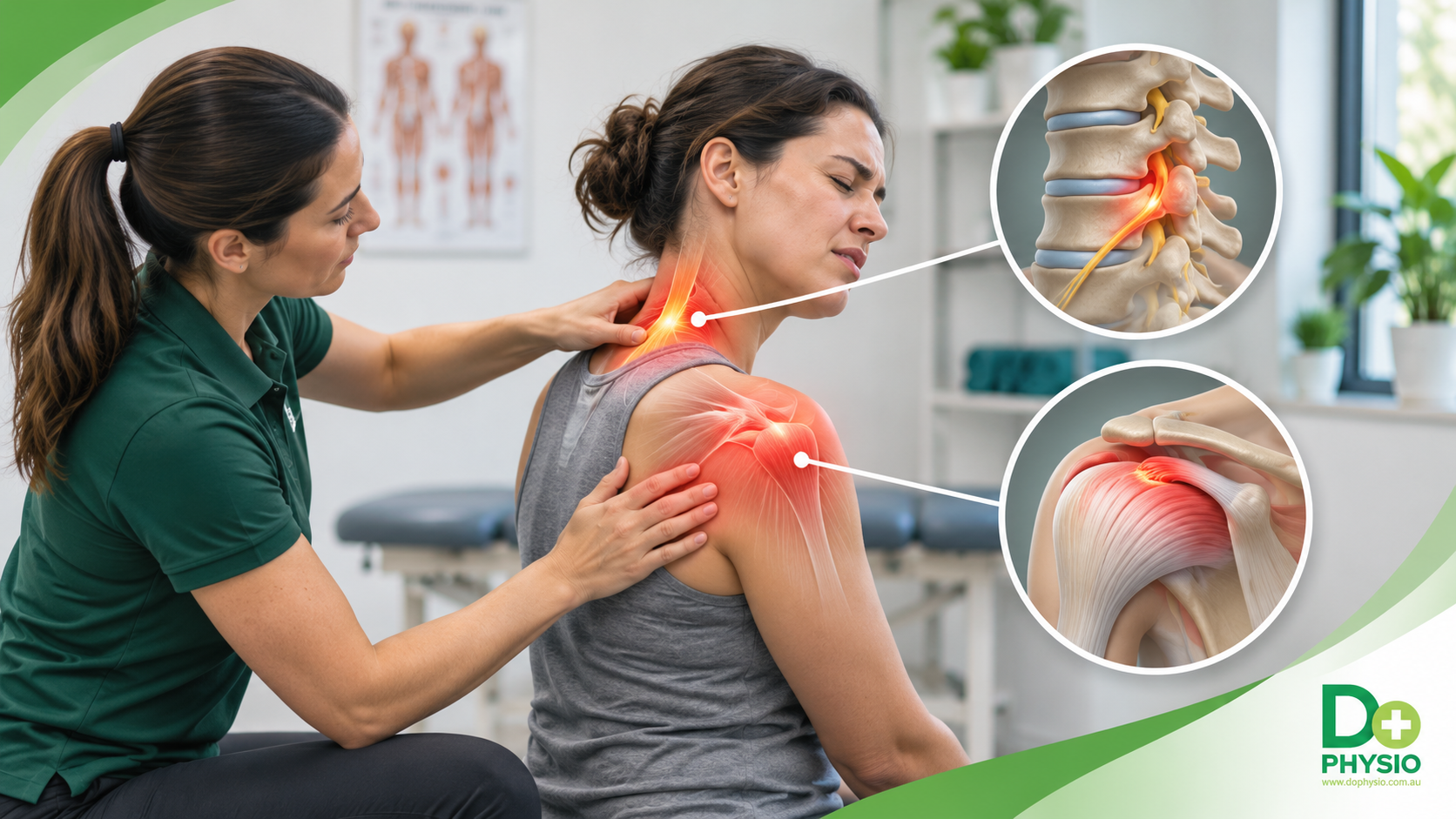
Shoulder pain can sometimes come from the neck rather than the shoulder itself. Pain that travels down the arm, tingling or weakness may warrant a neck and nerve assessment as well as a shoulder examination.
Clinical and Academic Discussion
Shoulder pain does not always originate from the shoulder joint. The cervical spine can produce pain around the shoulder blade, deltoid and arm, sometimes accompanied by weakness. Conversely, a painful rotator cuff can produce symptoms extending towards the neck. Identifying the dominant contributor is essential to planning rehabilitation.
Understanding the anatomical overlap
The C5 and C6 nerve roots contribute to the innervation of muscles involved in shoulder elevation and external rotation. Dysfunction of these roots may therefore resemble a rotator cuff disorder. Cervical somatic structures can also refer pain into the shoulder region without objective neurological deficits.
Clues pointing towards the cervical spine
Symptoms that change with neck movement, extend into the forearm or hand, or accompany altered sensation raise suspicion of cervical involvement. Myotomal weakness, reflex changes and sensory deficits support a diagnosis of radiculopathy when interpreted together. However, the absence of neck pain does not exclude a cervical source.
Clues pointing towards the shoulder
Pain associated with reaching overhead, resisted shoulder movement or lying on the affected side may indicate intrinsic shoulder pathology. Markedly restricted passive external rotation can suggest adhesive capsulitis or glenohumeral arthritis. Painful weakness may reflect a rotator cuff disorder, but can also arise through pain inhibition or neurological dysfunction.
How do we clinically differentiate the two?
A combined examination is preferable to assessing the shoulder in isolation. Cervical range of motion, neurological screening, Spurling’s test and upper limb neurodynamic testing may help evaluate nerve root involvement. Active and passive shoulder movement, resisted testing and task-specific assessment help evaluate local structures. No single provocative test is definitive; the findings must agree with the history.
What does the research tell us?
A systematic review by Katsuura et al. highlighted the overlap between cervical and shoulder disorders and the potential for imaging to mislead when interpreted without examination. A more recent review also supports evaluating both anatomical regions when the source is uncertain. Patients can have clinically relevant pathology in both regions simultaneously.
How treatment changes
For cervical presentations, management may involve graded cervical movement, education, strengthening and selected neural mobility exercises. For shoulder-dominant presentations, progressive rotator cuff and scapular loading may be appropriate. The exercise programme should reflect symptom irritability, neurological findings and functional goals rather than the scan alone.
When should you seek urgent medical assessment?
New gait disturbance, bilateral hand clumsiness or progressive limb weakness can indicate spinal cord involvement and require urgent medical assessment. Sudden shoulder or arm pain with chest pressure, sweating or breathlessness requires emergency assessment; call 000 in Australia.
References
Katsuura et al. (2020). Overlapping, Masquerading, and Causative Cervical Spine and Shoulder Pathology: A Systematic Review. PubMed.
Untwining the intertwined: a comprehensive review on differentiating pathologies of the shoulder and spine (2024). PubMed.
General educational information only. Individual assessment is recommended.
Literature and clinical content updated 25 November 2026. This is an educational resource, not a substitute for individual clinical assessment.